Measure a Narrow Cabinet Before Buying a Pull-Out Organizer
Clear opening width, usable depth, and vertical room decide whether a narrow pull-out organizer can work in your cabinet. Measure those first, then compare them with the seller's exact product dimensions, mounting details, and load rating. The seller's numbers are only one part of the check: you still have to match them against your own measurements, and a load rating does not by itself prove that the organizer fits or installs safely in your cabinet. The available evidence does not confirm fit for any particular cabinet.
Published Updated
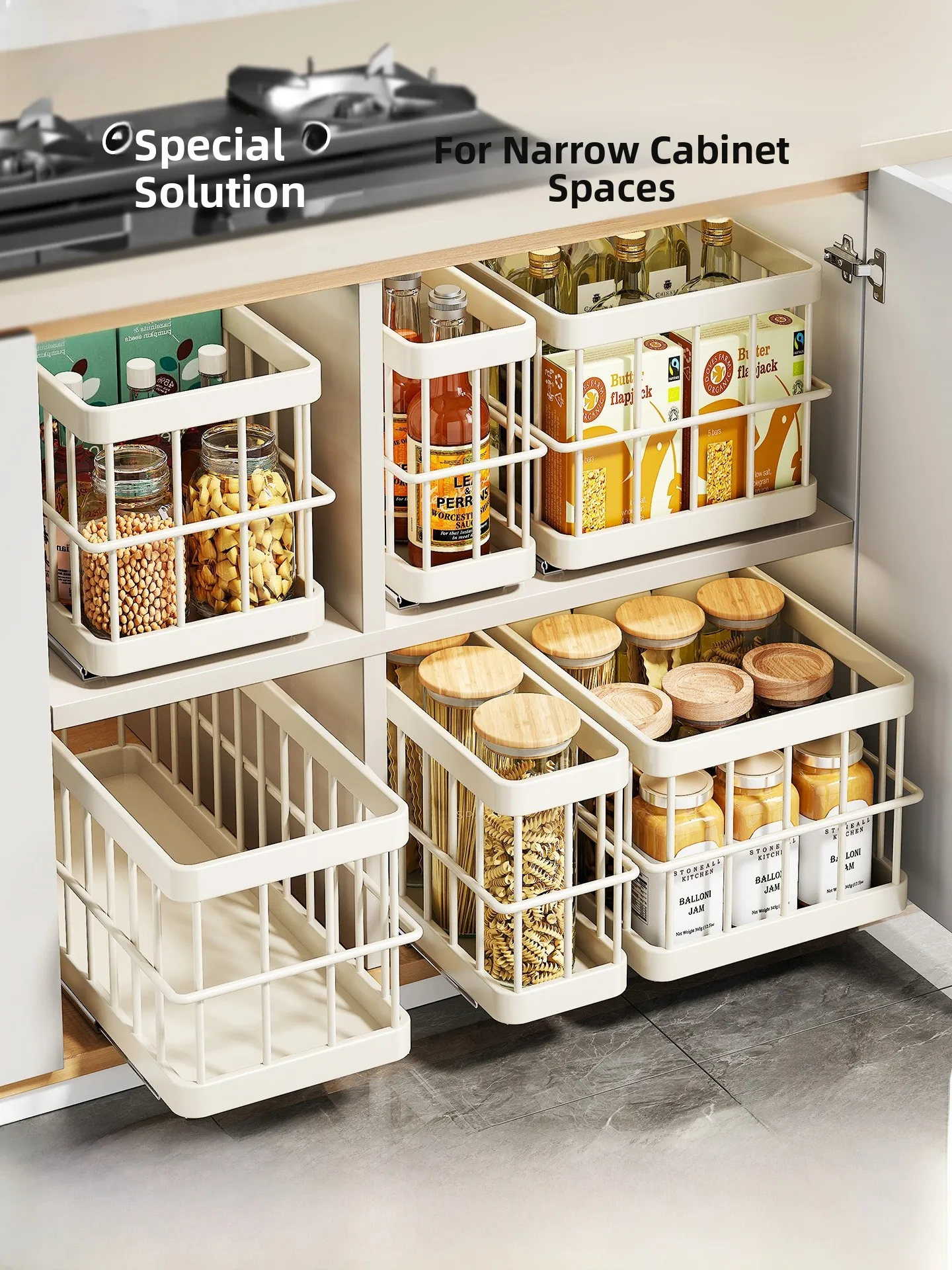
Start with the cabinet, not the product label
The product title may say pull out, but the cabinet still has to accept it: the opening, the depth behind the door, and the surface it mounts to are what you measure. The cabinet's nominal width, usually the outside width, does not answer those questions. Open the door to the position you will actually use, then measure the clear opening between the surfaces that limit the organizer. Note face frames, hinges, shelf lips, drawer fronts, and trim that narrow the path.
Check vertical room in two parts: the organizer's own height against the space under the counter or next shelf, and, if the design holds items above a shelf, the item height plus the organizer height. Measure the organizer's usable interior clearance and compare it with the footprint and height of the bottles, jars, or dish rack you plan to store. This is a use check for your storage plan; it does not change the basic requirement that the hardware fit the cabinet opening.
Retail search pages can identify formats, but they are weak fit guides. An Amazon search excerpt for pull-out pantry organizers showed more than 3,000 results and told shoppers to check each product page because price and other details may vary by size and color. That is a search-page summary, not a fit specification. Use individual product specifications instead; the search page does not settle fit.[3]
Record clear width, usable depth, and vertical room
Measure width at the tightest point the organizer must pass. Measure depth from the front frame or door plane to the rear wall along the surface where the organizer will sit. Measure vertical room from that mounting surface to the underside of the counter or next shelf. Add notes on door swing, drawer pulls, floor trim, and anything that could block a pull-out path.
Compare your measurements with the seller's exact product width, depth, and height. Ask whether a listed width includes rails, brackets, or handles. Check the minimum clear opening the seller requires, not just the product body size. Leave working room for installation, removal, and the small misalignments that happen in real cabinets. A written specification only helps once you have matched it to your own numbers.
Brand ranges do not replace your own measurements. KraftMaid's excerpt says its pantry pull-out storage has widths up to 24 inches. That is one manufacturer's stated range, not a rule for your cabinet or for other sellers. Use it as a reminder that widths vary and that the exact listing matters.[1]
Ask the seller these questions before paying
Ask the seller for the product's exact dimensions, the minimum opening it needs, the mounting method, and a load rating. Ask what surface the mount requires, whether the organizer can be removed without marks, and what hardware comes in the box. A written answer is a starting point: compare each number with your own cabinet measurements, and do not treat a load rating as proof that the mount is safe or that the organizer fits. If the answer is a title phrase such as no drilling or adjustable, ask for the detail behind it.
Titles use words like narrow space, super deep, dual-tier, and rotating. Treat those as seller wording until the listing or the seller supplies dimensions and a description of how the product moves. For a no-drill mount, ask how it is held in place, what it presses against, and whether the load rating applies to the shelf, the basket, or the whole assembly.
Trace the full pull-out path with the door open. Check hinges, adjacent drawers, handles, and floor trim. For a basket or tier, ask the seller whether it can slide out without hitting the door or frame, and test that against your own measurements. If the seller cannot answer basic dimension questions, or if your measurements leave no margin, stop. A stationary riser, a door-mounted rack, a custom pull-out, or a simpler shelf layout may avoid the movement-clearance problem, but each has its own mounting and capacity questions to check.
When a slide-out is the wrong format
A pull-out also has to move, so check the door swing, hinges, and the path the organizer takes before you buy. If the opening is too tight or the cabinet too shallow, a fixed shelf riser, a door-mounted rack, a custom pull-out built for the cabinet, or non-sliding bins may be alternatives, but their own mounting, capacity, and clearance need checking. For renters, ask whether any mount leaves marks before choosing a no-drill design.
Retail excerpts show why labels are not specs. A Walmart category excerpt says shoppers can explore pull-out pantry cabinets with adjustable shelves and organizers. An Amazon search excerpt says pull-out pantry shelves come with adjustable dimensions and heavy-duty rails. These are the pages' own summaries, not measured fit or load data, and they do not verify any particular listing.
If you plan to store heavy jars or bottles, ask for a load rating before trusting a no-drill label, and treat that rating as the seller's stated capacity, not proof of fit. If you plan to store dishes, ask whether the seller intends the basket or rack for dishes and whether any stated adjustment range covers your plate sizes. Fit comes before format.[2][4]
Choose a format only after the measurements agree
The three candidates here are a spice and condiment rack, an adjustable dish or basket insert, and a dual-tier shelf whose title uses the word rotating. Those labels point to different storage jobs. Use the same measurement sheet for each: clear opening, usable depth, vertical room, mounting method, and load rating.
A condiment rack may suit a cabinet where you want bottles and jars visible near the front. A basket insert may suit mixed items or dishes if the seller confirms the adjustment range. A dual-tier listing may suit a cabinet with enough vertical room for the format the seller describes. None of those uses is confirmed until the seller's dimensions and your measurements agree.
The product cards below give the specific reason to shortlist each listing and the caveat to resolve first. A listing that cannot supply its own dimensions is not a safe candidate, however well its title matches your cabinet.Shop now: Kitchen Pull out Spice Rack Narrow Cabinet Storage Shelf SupShop now: No Drilling Pull Out Drawer Kitchen Cabinet Organizer Adjust
What the available material can and cannot confirm
The available material consists of short retail excerpts and merchant listing titles. It supports the existence of product categories and the wording sellers use. It does not include installation manuals, measured clearance data, independent load tests, or fit confirmation for any cabinet. Treat search-result counts and category claims as what a page said when it was checked, not current market facts.
No source here can confirm that a particular organizer will fit a particular cabinet. If the seller will not provide written specifications, or if the numbers do not leave a working margin, buying nothing is a reasonable outcome. A custom or stationary solution may fit with fewer unknowns.
AliExpress
Related products
Kitchen Pull out Spice Rack Narrow Cabinet Storage Shelf Sup
The seller's title describes a pull-out spice rack for narrow cabinets and names oil, salt, sauce, and vinegar storage. It is worth shortlisting for condiment bottles if the seller's exact width, depth, and mounting details match your measured cabinet.
The title says super deep and no drilling required, but it gives no dimensions, load rating, rail details, or required opening. Confirm those before ordering.
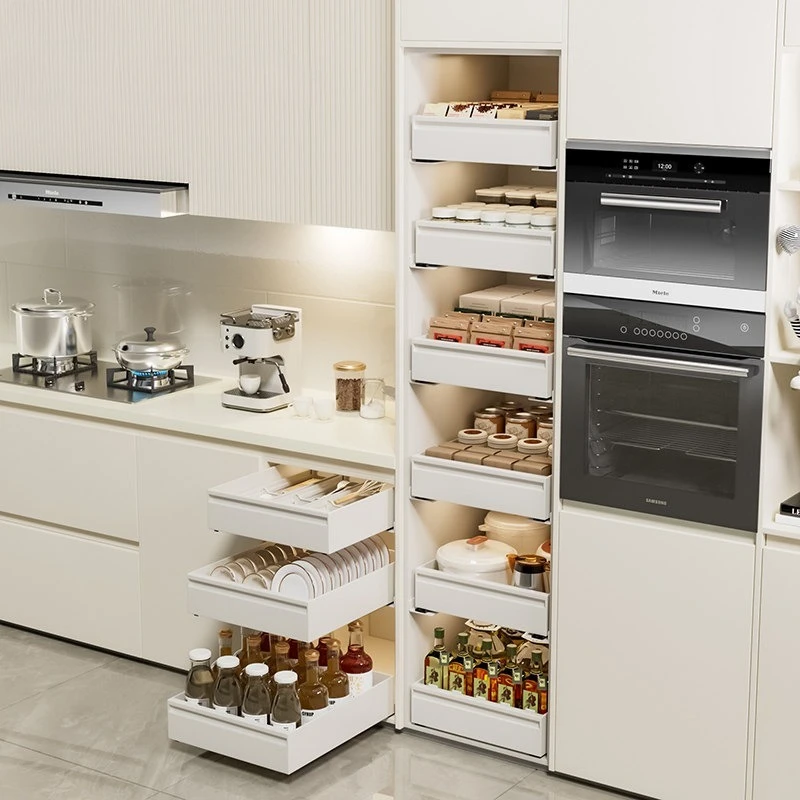
No Drilling Pull Out Drawer Kitchen Cabinet Organizer Adjust
The title describes a no-drilling pull-out drawer with an adjustable dish rack and narrow-space storage basket. It may suit a cabinet where you want a pull-out organizer for dishes or mixed items, provided the seller supplies the adjustment range and exact dimensions.
The title does not state the adjustment range, basket load limit, or required opening. The word adjustable alone is not a fit specification.
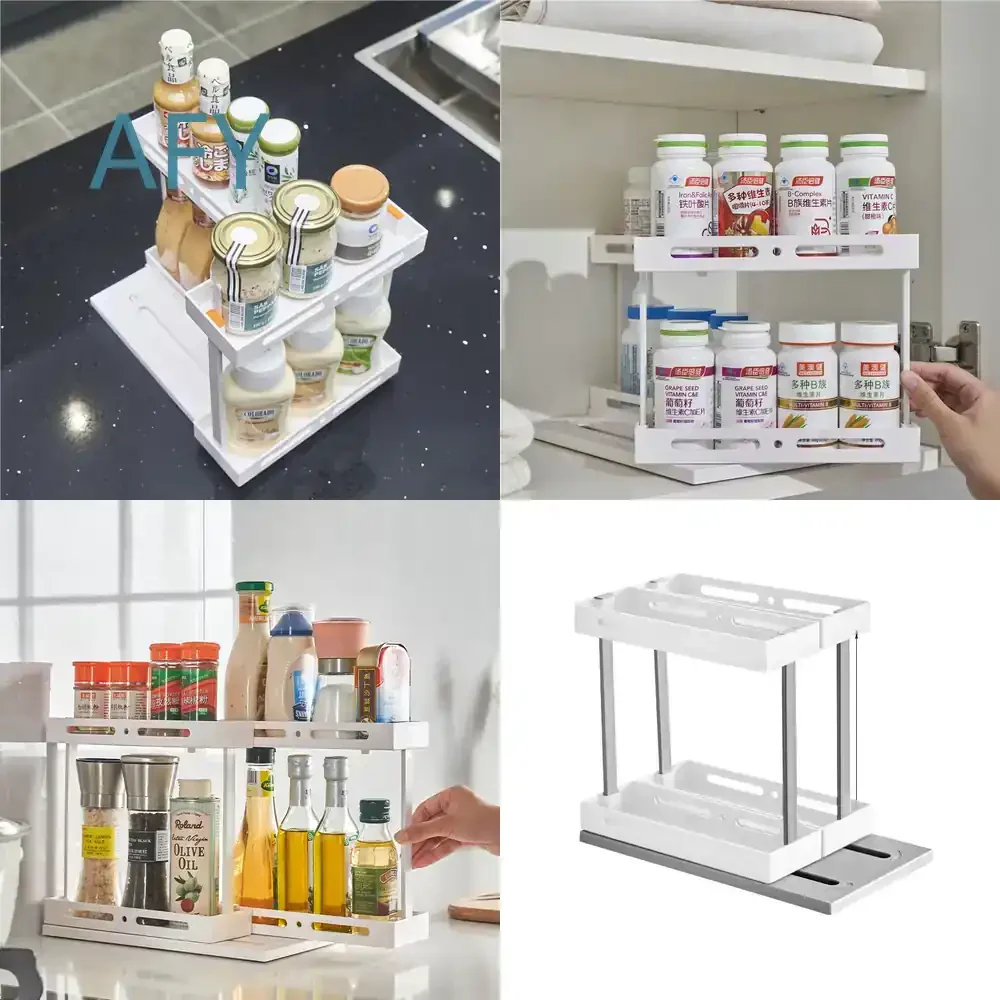
Rotating No-Drill Kitchen Pull-Out Shelf for Narrow Cabinets
The title calls this a rotating no-drill pull-out shelf for narrow cabinets with a dual-tier sliding spice rack. It is a candidate only if the seller confirms what moves and supplies the dimensions needed for your cabinet.
The word Rotating is a title claim, not proof of a specific mechanism. Ask the seller whether the product rotates, what clearance that motion needs, and confirm dimensions and load rating. The listing sits under Tools and Tool Parts, so check that it is the kitchen organizer you expect.
Questions, answered
Can I use the cabinet's nominal width as the organizer width?
No. Nominal width usually describes the cabinet box, not the clear opening an insert must pass. Measure between the surfaces that actually limit the organizer with the door open, and ask the seller whether the listed width includes rails or mounting hardware.
What should I check on a cabinet with a face frame and hinges?
Measure the clear opening inside the face frame and note how far hinges or door hardware intrude. Check the door swing and any adjacent drawer or handle that could block the pull-out path. Give those numbers to the seller and ask for the minimum opening the organizer requires.
Does a rotating title mean the organizer turns?
The title uses the word rotating, which is a clue to the mechanism, but a title is not proof of how the product operates. Ask which part moves, whether any rotation needs extra clearance, and whether that motion suits the items you plan to store. Only the seller's description can confirm the mechanism and the space it needs.