Vacuum Bags or Compression Bags for Winter Storage?
A practical comparison for renters with limited closet space, covering how vacuum bags pull air out, how compression bags press clothing flatter, which seller claims remain unverified, and when roomier storage is the safer call.
Published Updated

The space problem starts before the shopping decision
Small apartments turn seasonal storage into a space problem before it becomes a product choice. A brand article about studio living describes winter coats, ski jackets and thick blankets sitting unused for months while taking up closet and under-bed room. The same article says vacuum bags reduce storage volume and gives a claim of nearly 80%, so the marketing case is easy to see.
The practical question is what each bag asks you to do, how easily you reopen it, and which fabrics should stay out of tight compression.[1]
What to compare before buying either type
Start with the evacuation method. The source excerpts describe vacuum bags as removing air and compression bags as pressing clothes into a flatter form, but they do not give a complete equipment list for either type. Check the valve, closure and instructions for the specific bag.
Check the care label before compressing anything. The excerpts raise concerns about compression and insulated fill, but they do not provide test results. Treat those concerns as a reason to read the label, not as a measured effect.
Make sure everything is fully dry before sealing. The excerpts mention moisture as a concern in sealed storage, but they do not establish how a particular bag performs. A listing cannot confirm dryness for you.[2][6][7][8][9][10]
How vacuum and compression bags differ in practice
On space, both methods reduce bulk. A retailer article claims vacuum-seal bags can cut volume by up to 70%, while the brand article above uses a nearly 80% figure. Those are seller or brand claims. This comparison includes no independent measurements, so do not treat the numbers as results for your blanket.
Equipment varies by product. The source excerpts do not give a complete package list for either category, so the product's own instructions decide what you need.
Protection claims are hard to verify from the material here. None of these sources reports a test of mold or insect protection, so treat such claims as unproven.
For down and insulated items, the excerpts warn about compression but do not provide test results. A dense blanket and a down jacket may need different handling, so check the care label and consider looser storage where it calls for it.[1][2][3][4][6][7][8][9]
Which method fits your closet and your fabrics
For ordinary bulky winter clothes, a vacuum-style bag is worth considering if you can follow its evacuation instructions. The excerpt that lists seasonal and bulky clothes as candidates is general guidance, not a test of a specific bag.
If you have no convenient place for a pump, look for a compression bag whose listing explains the closure and expected use. A no-tool phrase is a prompt to check the mechanism and the dimensions. It is not a performance grade.
For down jackets and down duvets, the excerpts lean toward roomier or breathable storage, but they do not establish one safe method. Check the care label and consider looser storage where the label calls for it.[5][6][8][9]
Two listings to inspect, not automatic picks
The two listing records show why the wording matters. The TAILI Store listing names clothing, comforters and blankets and uses the phrase 'No Need Tool' alongside compression wording. The Master Of Cleaning Store listing uses 'Reusable' and 'Vacuum' and names clothes and blankets for travel packing.
Both are candidates for inspection, not proof of performance. The listing records show different wording, not tested differences in capacity or sealing.Shop now: TAILI Cubic Vacuum Bags Large Storage Bag for Clothing, ComfShop now: Reusable Compression Empty Bag Sealer Clothes Travel Packing
What this evidence can and cannot settle
This comparison rests on brand and retailer articles, search excerpts and listing-level product details. The sources are useful for understanding the claims shoppers will meet, not for independent performance testing. The 70% and nearly 80% volume figures appear in seller or brand content, and the listing records do not give full package specifications.
If the item is down or you cannot keep it dry, a roomier breathable bag or no purchase may be the wiser choice.[1][3][6][9][10]
AliExpress
Related products
TAILI Cubic Vacuum Bags Large Storage Bag for Clothing, Comf
The seller's title names clothing, comforters and blankets and pairs 'No Need Tool' with compression wording. That phrase points to compression without a separate tool, but it is seller wording: confirm the mechanism and dimensions before relying on the bag.
The title does not supply dimensions, closure details or an explanation of how the no-tool compression works. Check those points and the fabric suitability before buying.
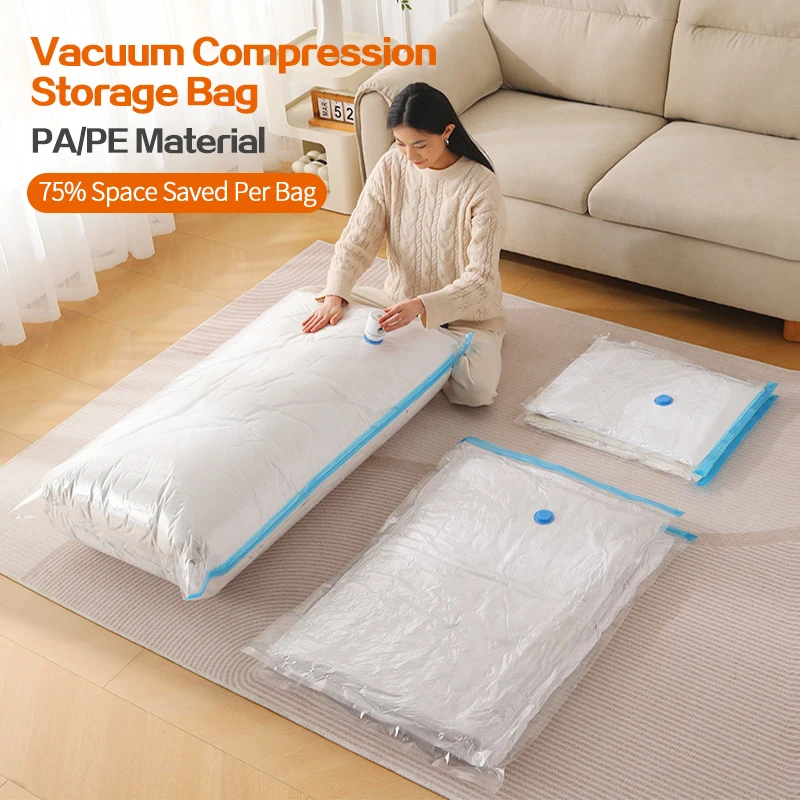
Reusable Compression Empty Bag Sealer Clothes Travel Packing
The seller's title uses 'Reusable' and 'Vacuum' and names clothes and blankets, plus travel packing. It is worth checking if you want a reusable bag and will confirm the suction method.
The title calls the bag Large, but it gives no specific dimensions, does not state whether a pump is included, and does not name a hose type. Confirm those details and the closure before relying on it for a thick blanket.
Questions, answered
Do vacuum storage bags always need a vacuum cleaner?
The listing titles do not provide a complete package list: one says 'No Need Tool' and the other says 'Vacuum' without naming a pump. Check the valve or hose type and package contents before buying.[4]
How should I store a down jacket or down duvet?
Sources warn that prolonged compression can flatten down loft and reduce warmth. One recommends roomy storage for down-filled items, and another suggests a loose cotton bag for down jackets. If you cannot store the item loosely, limit compression and check the care label.[6][8][9][10]